Upworthy is a media brand that focuses on positive storytelling. It was started in March 2012 by Eli Pariser, the former executive director of MoveOn, and Peter Koechley, the former managing editor of The Onion. One of Facebook's co-founders, Chris Hughes, was an early investor. At its peak between 2012 and 2014, it reached up to 100 million people a month. In 2017, the company was acquired by Good Worldwide. == History == Upworthy was launched in 2012 with a focus on aggregating positive content, which aligned with Facebook's algorithm. Originally, Upworthy curators searched the internet for existing content to feature on the site. Once selected as an option, curators brainstormed different headlines and shareable images for the content, and tested it with a small sample of Upworthy's visitors before sharing it on the site. The site popularized a clickbait style of two-phrase headlines. The company simplifies issues that are controversial by nature, which are presented from a politically liberal point of view and are heavily fact-checked for accuracy. In June 2013, an article in Fast Company called Upworthy "the fastest growing media site of all time". It had 8.7 million unique monthly visitors in the first six months, and in November 2013, had a high of 87 million unique visitors in a single month. In 2013, Facebook changed its algorithm, leading to a significant decline in readers from that platform. Upworthy fired one round of writers in 2015, and another in 2016, after an unionization effort by some of the staff. The union involved, the Writers Guild of America, East, has organized several online "viral" news publishers. In January 2017, Upworthy was acquired by media company GOOD Worldwide. The newsrooms of the two organizations would merge as part of the acquisition. About 20 staffers were laid off as part of the merger. In March 2020, Upworthy saw a 65% increase in Instagram followers and a 47% increased interest in positive content on-site page views as a result of increased interest in positive content during the COVID-19 pandemic. In January 2023, National Geographic Books bought Good People: Stories From the Best of Humanity from Upworthy, with a publication date of September 3, 2024. The book is described as "a heartwarming collection of first-person tales that will provide comfort and inspiration to anyone who could use a little dose of joy right now". It was created by two senior Upworthy team members, Gabriel Reilich and Lucia Knell, and features 101 stories from Upworthy's audience. The co-creators encouraged Upworthy followers to connect with the brand through questions on their posts, opening the door for organic and personal stories to be shared in the comment sections. The book debuted on The New York Times nonfiction bestseller list on September 22, 2024, and remained on the list for two weeks. The book is seen in the top 10 on Publishers Weekly Fall 2024 Adult Preview: Lifestyle and on The Washington Post's "5 feel-good books".
SeaTable
SeaTable is a no-code platform that allows users to develop and implement business processes. The cloud collaboration service SeaTable is marketed by the GmbH of the same name with headquarters in Mainz and additional offices in Berlin and Beijing, and developed by the same company as Seafile. == History == SeaTable is a collaborative database and low-code application platform developed as part of a joint venture between Seafile Ltd., a software company based in Guangzhou, China, and SeaTable GmbH, a German firm headquartered in Mainz. Founded in 2020, the project represents the international expansion of Seafile, a Chinese developer originally known for its file synchronization and sharing software. While SeaTable's cloud services and European client operations are managed by the German entity, the platform itself is developed in China by Seafile's engineering team. This cross-border structure, described by TechCrunch as an “unconventional path” for a Chinese startup expanding abroad, reflects Seafile's effort to maintain its product development in China while addressing growing scrutiny in Western markets over data governance and corporate control. In 2021, an innovation project led by the Cyber Innovation Hub at the IT School of the German Armed Forces started to evaluate the possibilities of a large-scale deployment at the German Armed Forces. The evaluation project is currently still ongoing. In 2022, SeaTable is optimizing its database backend to allow millions of records within one base in the future. The focus of development is increasingly on automation and visualization. In 2025, SeaTable introduced AI-powered automations with version 6. The update enabled the integration of large language models (LLMs) for text analysis and automated decision-making. SeaTable operates a self-hosted LLM on servers provided by Hetzner (Germany), while self-hosted deployments can connect to any compatible model. == Features == SeaTable combines the traditional capabilities of a spreadsheet such as Excel and supplements them with a wide range of functions for process automation and visualization as well as a fully comprehensive API. SeaTable is not a pure cloud solution, but can alternatively be installed on a private server and operated completely autonomously. In this way, the owner retains full control over their own data. The installation is done via Docker on a Linux server. == Security and privacy == While most no-code platforms exist only as SaaS solutions, SeaTable describes itself as a data-sparse European solution. While initially the SeaTable Cloud was hosted on Amazon AWS, the move to the German data centers of Swiss provider Exoscale then took place in May 2021. This was followed by the replacement of the Freshdesk cloud ticketing system with a self-hosted Zammad instance, and since April 2022 SeaTable has completely dispensed with all tracking cookies on its website.
Speech-generating device
Speech-generating devices (SGDs), also known as voice output communication aids, are electronic augmentative and alternative communication (AAC) systems used to supplement or replace speech or writing for individuals with severe speech impairments, enabling them to verbally communicate. SGDs are important for people who have limited means of interacting verbally, as they allow individuals to become active participants in communication interactions. They are particularly helpful for patients with amyotrophic lateral sclerosis (ALS) but recently have been used for children with predicted speech deficiencies. There are several input and display methods for users of varying abilities to make use of SGDs. Some SGDs have multiple pages of symbols to accommodate a large number of utterances, and thus only a portion of the symbols available are visible at any one time, with the communicator navigating the various pages. Speech-generating devices can produce electronic voice output by using digitized recordings of natural speech or through speech synthesis—which may carry less emotional information but can permit the user to speak novel messages. The content, organization, and updating of the vocabulary on an SGD is influenced by a number of factors, such as the user's needs and the contexts that the device will be used in. The development of techniques to improve the available vocabulary and rate of speech production is an active research area. Vocabulary items should be of high interest to the user, be frequently applicable, have a range of meanings, and be pragmatic in functionality. There are multiple methods of accessing messages on devices: directly or indirectly, or using specialized access devices—although the specific access method will depend on the skills and abilities of the user. SGD output is typically much slower than speech, although rate enhancement strategies can increase the user's rate of output, resulting in enhanced efficiency of communication. The first known SGD was prototyped in the mid-1970s, and rapid progress in hardware and software development has meant that SGD capabilities can now be integrated into devices like smartphones. Notable users of SGDs include Stephen Hawking, Roger Ebert, Tony Proudfoot, and Pete Frates (founder of the ALS Ice Bucket Challenge). Speech-generating systems may be dedicated devices developed solely for AAC, or non-dedicated devices such as computers running additional software to allow them to function as AAC devices. == History == SGDs have their roots in early electronic communication aids. The first such aid was a sip-and-puff typewriter controller named the patient-operated selector mechanism (Naman) prototyped by Reg Maling in the United Kingdom in 1960. POSSUM scanned through a set of symbols on an illuminated display. Researchers at Delft University in the Netherlands created the lightspot-operated typewriter (LOT) in 1970, which made use of small movements of the head to point a small spot of light at a matrix of characters, each equipped with a photoelectric cell. Although it was commercially unsuccessful, the LOT was well received by its users. In 1966, Barry Romich, a freshman engineering student at Case Western Reserve University, and Ed Prentke, an engineer at Highland View Hospital in Cleveland, Ohio, formed a partnership, creating the Prentke Romich Company. In 1969, the company produced its first communication device, a typing system based on a discarded Teletype machine. In 1979, Mark Dahmke developed software for a vocal communication aid program using the Computalker CT-1 analog speech synthesizer with a microcomputer. The software utilized phonemes to generate speech, assisting individuals with communication impairments in constructing words and sentences. Dahmke's work contributed to the advancement of assistive technology for people with disabilities. Notably, he designed the "Vocabulary Management System" for Bill Rush, a student with cerebral palsy. This early speech synthesis technology facilitated improved communication for Rush and was featured in a 1980 issue of LIFE Magazine. Dahmke's contributions have influenced the development of augmentative and alternative communication (AAC) technologies. During the 1970s and early 1980s, several other companies emerged that have since become prominent manufacturers of SGDs. Toby Churchill founded Toby Churchill Ltd in 1973, after losing his speech following encephalitis. In the US, Dynavox (then known as Sentient Systems Technology) grew out of a student project at Carnegie-Mellon University, created in 1982 to help a young woman with cerebral palsy to communicate. Beginning in the 1980s, improvements in technology led to a greatly increased number, variety, and performance of commercially available communication devices, and a reduction in their size and price. Alternative methods of access such as Target Scanning (also known as eye pointing) calibrate the movement of a user's eyes to direct an SGD to produce the desired speech. Scanning, in which alternatives are presented to the user sequentially, became available on communication devices. Speech output possibilities included both digitized and synthesized speech. Rapid progress in hardware and software development continued, including projects funded by the European Community. The first commercially available dynamic screen speech-generating devices were developed in the 1990s. Software was developed that allowed the computer-based production of communication boards. High-tech devices have continued to become smaller and lighter, while increasing accessibility and capability; communication devices can be accessed using eye-tracking systems, perform as a computer for word-processing and Internet use, and as an environmental control device for independent access to other equipment such as TV, radio and telephones. Stephen Hawking came to be associated with the unique voice of his particular synthesis equipment. Hawking was unable to speak due to a combination of disabilities caused by ALS, and an emergency tracheotomy. In the past 20 or so years SGD have gained popularity amongst young children with speech deficiencies, such as autism, Down syndrome, and predicted brain damage due to surgery. Starting in the early 2000s, specialists saw the benefit of using SGDs not only for adults but for children, as well. Neuro-linguists found that SGDs were just as effective in helping children who were at risk for temporary language deficits after undergoing brain surgery as it is for patients with ALS. In particular, digitized SGDs have been used as communication aids for pediatric patients during the recovery process. == Access methods == There are many methods of accessing messages on devices: directly, indirectly, and with specialized access devices. Direct access methods involve physical contact with the system, by using a keyboard or a touch screen. Users accessing SGDs indirectly and through specialized devices must manipulate an object in order to access the system, such as maneuvering a joystick, head mouse, optical head pointer, light pointer, infrared pointer, or switch access scanner. The specific access method will depend on the skills and abilities of the user. With direct selection a body part, pointer, adapted mouse, joystick, or eye tracking could be used, whereas switch access scanning is often used for indirect selection. Unlike direct selection (e.g., typing on a keyboard, touching a screen), users of Target Scanning can only make selections when the scanning indicator (or cursor) of the electronic device is on the desired choice. Those who are unable to point typically calibrate their eyes to use eye gaze as a way to point and blocking as a way to select desired words and phrases. The speed and pattern of scanning, as well as the way items are selected, are individualized to the physical, visual and cognitive capabilities of the user. == Message construction == Augmentative and alternative communication is typically much slower than speech, with users generally producing 8–10 words per minute. Rate enhancement strategies can increase the user's rate of output to around 12–15 words per minute, and as a result enhance the efficiency of communication. In any given SGD there may be a large number of vocal expressions that facilitate efficient and effective communication, including greetings, expressing desires, and asking questions. Some SGDs have multiple pages of symbols to accommodate a large number of vocal expressions, and thus only a portion of the symbols available are visible at any one time, with the communicator navigating the various pages. Speech-generating devices generally display a set of selections either using a dynamically changing screen, or a fixed display. There are two main options for increasing the rate of communication for an SGD: encoding, and prediction. Encoding permits a user to produce a word, sentence or phrase using only on
List of Tesla Autopilot crashes
Tesla Autopilot, a Level 2 advanced driver assistance system (ADAS), was released in October 2015 and the first fatal crashes involving the system occurred less than one year later. The fatal crashes attracted attention from news publications and United States government agencies, including the National Transportation Safety Board (NTSB) and National Highway Traffic Safety Administration (NHTSA), which has argued the Tesla Autopilot death rate is higher than the reported estimates. In addition to fatal crashes, there have been many nonfatal ones. Causes behind the incidents include the ADAS failing to recognize other vehicles, insufficient Autopilot driver engagement, and violating the operational design domain. As of October 2025, there have been hundreds of nonfatal incidents involving versions of Autopilot and sixty-five reported fatalities, fifty-four of which NHTSA investigations or expert testimony later verified and two that NHTSA's Office of Defect Investigations determined as happening during the engagement of Full Self-Driving (FSD) after 2022. Collectively, these cases culminated in a general recall in December 2023 of all vehicles equipped with Autopilot, which Tesla claims it resolved by an over-the-air software update. Immediately after closing its investigation in April 2024, NHTSA opened a recall query to determine the effectiveness of the recall. == Notable fatal crashes == === Handan, Hebei, China (January 20, 2016) === On January 20, 2016, Gao Yaning, the driver of a Tesla Model S in Handan, Hebei, China, was killed when his car crashed into a stationary truck. The Tesla was following a car in the far left lane of a multi-lane highway; the car in front moved to the right lane to avoid a truck stopped on the left shoulder, and the Tesla, which the driver's father believes was in Autopilot mode, did not slow before colliding with the stopped truck. According to footage captured by a dashboard camera, the stationary street sweeper on the left side of the expressway partially extended into the far left lane, and the driver did not appear to respond to the unexpected obstacle. Initially, Yaning was held responsible for the collision by local traffic police and, in September 2016, his family filed a lawsuit in July against the Tesla dealer who sold the car. The family's lawyer stated the suit was intended "to let the public know that self-driving technology has some defects. We are hoping Tesla when marketing its products, will be more cautious. Do not just use self-driving as a selling point for young people." Tesla released a statement which said they "have no way of knowing whether or not Autopilot was engaged at the time of the crash" since the car telemetry could not be retrieved remotely due to damage caused by the crash. In 2018, the lawsuit was stalled because telemetry was recorded locally to a SD card and was not able to be given to Tesla, who provided a decoding key to a third party for independent review. Tesla stated that "while the third-party appraisal is not yet complete, we have no reason to believe that Autopilot on this vehicle ever functioned other than as designed." Chinese media later reported that the family sent the information from that card to Tesla, which admitted Autopilot was engaged two minutes before the crash. Tesla since then removed the term "Autopilot" from its Chinese website. === Williston, Florida, US (May 7, 2016) === On May 7, 2016, Tesla driver Joshua Brown was killed in a crash with an 18-wheel tractor-trailer in Williston, Florida. By late June 2016, the NHTSA opened a formal investigation into the fatal autonomous accident, working with the Florida Highway Patrol. According to the NHTSA, preliminary reports indicate the crash occurred when the tractor-trailer made a left turn in front of the 2015 Tesla Model S at an intersection on a non-controlled access highway, and the car failed to apply the brakes. The car continued to travel after passing under the truck's trailer. The Tesla was eastbound in the rightmost lane of US 27, and the westbound tractor-trailer was turning left at the intersection with NE 140th Court, approximately 1 mi (1.6 km) west of Williston; the posted speed limit is 65 mph (105 km/h). The diagnostic log of the Tesla indicated it was traveling at a speed of 74 mi/h (119 km/h) when it collided with and traveled under the trailer, which was not equipped with a side underrun protection system. A reconstruction of the accident estimated the driver would have had approximately 10.4 seconds to detect the truck and take evasive action. The underride collision sheared off the Tesla's greenhouse, destroying everything above the beltline, and caused fatal injuries to the driver. In the approximately nine seconds after colliding with the trailer, the Tesla traveled another 886.5 feet (270.2 m) and came to rest after colliding with two chain-link fences and a utility pole. The NHTSA's preliminary evaluation was opened to examine the design and performance of any automated driving systems in use at the time of the crash, which involves a population of an estimated 25,000 Model S cars. On July 8, 2016, the NHTSA requested Tesla Inc. to hand over to the agency detailed information about the design, operation and testing of its Autopilot technology. The agency also requested details of all design changes and updates to Autopilot since its introduction, and Tesla's planned updates scheduled for the next four months. According to Tesla, "neither autopilot nor the driver noticed the white side of the tractor-trailer against a brightly lit sky, so the brake was not applied." The car attempted to drive full speed under the trailer, "with the bottom of the trailer impacting the windshield of the Model S". Tesla also stated that this was Tesla's first known Autopilot-related death in over 130 million miles (208 million km) driven by its customers while Autopilot was activated. According to Tesla there is a fatality every 94 million miles (150 million km) among all type of vehicles in the U.S. It is estimated that billions of miles will need to be traveled before Tesla Autopilot can claim to be safer than humans with statistical significance. Researchers say that Tesla and others need to release more data on the limitations and performance of automated driving systems if self-driving cars are to become safe and understood enough for mass-market use. The truck's driver told the Associated Press that he could hear a Harry Potter movie playing in the crashed car, and said the car was driving so quickly that "he went so fast through my trailer I didn't see him. [The film] was still playing when he died and snapped a telephone pole a quarter-mile down the road." According to the Florida Highway Patrol, they found in the wreckage an aftermarket portable DVD player. (It is not possible to watch videos on the Model S touchscreen display while the car is moving.) A laptop computer was recovered during the post-crash examination of the wreck, along with an adjustable vehicle laptop mount attached to the front passenger's seat frame. The NHTSA concluded the laptop was probably mounted, and the driver may have been distracted at the time of the crash. In January 2017, the NHTSA Office of Defects Investigations (ODI) released a preliminary evaluation, finding that the driver in the crash had seven seconds to see the truck and identifying no defects in the Autopilot system; the ODI also found that the Tesla car crash rate dropped by 40 percent after Autosteer installation, but later also clarified that it did not assess the effectiveness of this technology or whether it was engaged in its crash rate comparison. The NHTSA Special Crash Investigation team published its report in January 2018. According to the report, for the drive leading up to the crash, the driver engaged Autopilot for 37 minutes and 26 seconds, and the system provided 13 "hands not detected" alerts, to which the driver responded after an average delay of 16 seconds. The report concluded "Regardless of the operational status of the Tesla's ADAS technologies, the driver was still responsible for maintaining ultimate control of the vehicle. All evidence and data gathered concluded that the driver neglected to maintain complete control of the Tesla leading up to the crash." In July 2016, the NTSB announced it had opened a formal investigation into the fatal accident while Autopilot was engaged. The NTSB is an investigative body that only has the power to make policy recommendations. An agency spokesman said, "It's worth taking a look and seeing what we can learn from that event, so that as that automation is more widely introduced we can do it in the safest way possible." The NTSB opens annually about 25 to 30 highway investigations. In September 2017, the NTSB released its report, determining that "the probable cause of the Williston, Florida, crash was the truck driver's failure to yield the right of way to the car, combine
Micah Xavier Johnson
Micah Xavier Johnson (July 2, 1991 – July 8, 2016) was an American Army reserve Afghan war veteran, black nationalist, and mass murderer who perpetrated the 2016 shooting of Dallas police officers during a Black Lives Matter protest. He ambushed and killed five officers and wounded eleven others in Downtown, Dallas, Texas. He was killed by police during a standoff after expressing anger over police killings of black men. The shootings were the second-deadliest targeted attack on law enforcement officers in U.S. history, surpassed only by the September 11 attacks. == Early life == Micah Xavier Johnson was born in Magee, Mississippi, on July 2, 1991, and he was raised in Mesquite, Texas. When he was four years old, his parents divorced. At 17, Johnson enrolled at John Horn High School, where he joined the Junior Reserve Officers' Training Corps, as reported by the Mesquite Independent school district. He faced academic challenges, graduating in 2009 with a 1.98 GPA and ranking 430th out of 453 students in his class. In Spring 2011, Johnson registered for four courses at Richland college but did not complete any. Evidence suggests his enrollment at Richland gave him access to El Centro College, due to his pre-planned and coordinated movements throughout Building B during his standoff with police in 2016. == Military service == === Enlistment and early service === Micah Xavier Johnson enlisted in the U.S. Army Reserve in March 2009 at the age of 18, shortly after graduating high school in Mesquite, Texas. His initial service was primarily stateside, where he trained as a carpentry and masonry specialist (military occupational specialty 51B). This role involved engineering tasks such as construction and repair in support of military operations. During his reserve tenure, Johnson served part-time while living at home, and he was described by family and friends as initially idealistic about the military, even aspiring to become a police officer. === Deployment to Afghanistan === In September 2013, Johnson was activated for full-time duty and deployed to Afghanistan as part of the 420th Engineer Brigade, a unit based in Seagoville, Texas. His tour began in November 2013 and lasted approximately eight months, ending in July 2014. During this period, he performed non-combat engineering duties, though the stresses of serving in a combat zone were noted by those close to him. Associates from his service later suggested he experienced significant psychological strain, including the loss of friends and general disillusionment with military life, which contrasted with his pre-deployment enthusiasm. His mother later reflected that "the military was not what Micah thought it would be." === Sexual harassment allegation and early return === About six months into his deployment, in May 2014, Johnson faced a serious accusation of sexual harassment from a higher-ranking female soldier. She filed for a military protective order against him, prompting an investigation. As a result, his chain of command recommended an "other than honorable" discharge—the second (more severe is a dishonorable discharge, which does not require a court martial) most severe administrative separation short of a court-martial—and he was sent back to the United States ahead of schedule. Despite this, Johnson was not court-martialed, and the case did not lead to criminal charges. A military lawyer who represented him described the handling as unusual, noting that "someone really screwed up" in allowing him to avoid harsher consequences. === Post-deployment and discharge === Upon returning stateside in August 2014, Johnson resumed reserve duties with his engineering brigade until April 2015. He was honorably discharged at the rank of private first class (E-3), a relatively low junior enlisted rank after six years of service, which military sources attributed partly to the unresolved harassment allegation impacting his promotions and evaluations. Friends and family observed a marked change in his demeanor post-deployment: he became more reclusive, resentful toward the government, and withdrawn, with some speculating that the Afghanistan experience and the scandal contributed to a "small breakdown." In July 2016, following the Dallas shooting, the U.S. Army launched an internal review of his service record, including the harassment claims, to assess whether all misconduct allegations had been fully investigated. == Shootings == On July 7, 2016, a peaceful Black Lives Matter protest marched through downtown Dallas, Texas, drawing about 800 demonstrators. The event responded to the recent police killings of Alton Sterling in Baton Rouge, Louisiana, on July 5, and Philando Castile in Falcon Heights, Minnesota, on July 6—both black men shot during encounters captured on video. Around 100 officers monitored the march, which passed near El Centro College without incident until gunfire erupted around 8:45 p.m. Johnson arrived in a dark SUV, armed with an SKS semi-automatic rifle, a handgun, extra ammunition, and ballistic vests. He parked near the protest's end, chatted briefly with two officers, then opened fire on police from an elevated position on Lamar Street (now Botham Jean Boulevard). He shot from behind barriers, through windows, and while moving, targeting white officers specifically. The ambush killed five officers and wounded seven more, plus two civilians. Gunfire scattered protesters in panic as Johnson used military-style tactics, like quick position changes, to prolong the assault. === Standoff and Johnson's end === Johnson fled into El Centro College's Building C, then Building B, navigating pre-planned routes with familiarity from prior enrollment at nearby Richland College. He barricaded in a parking garage, wounding more officers in close-range fights. During two-hour negotiations, he taunted police via phone—laughing, singing, asking kill counts, and claiming planted bombs (none found). He admitted solo action, rage at White officers, and no group ties. At 2:30 a.m. on July 8, SWAT ended the standoff by detonating a bomb via remote-controlled robot in the garage, killing Johnson. This marked the first U.S. police use of such a tactic. === Victims and investigation findings === The slain officers were: Brent Thompson (Transit Authority, 36), Patrick Zamarripa (Dallas PD, 33), Michael Krol (Dallas PD, 40), Lorne Ahrens (Dallas PD, 48), and Michael Smith (Dallas PD, 55). Wounded officers included Sheik Smith, John Mitchell, and others; civilians She Tamara El-Sobky and Hillary Castro. Searches of Johnson's home revealed bomb-making materials, rifles, vests, and notes on tactics, suggesting plans for a larger attack. He had practiced explosions and honed skills post-discharge, including marksmanship. === Aftermath and impact === Dallas mourned with vigils and memorials, while national protests against police violence continued amid grief. President Barack Obama, the first African American president of the United States, called Johnson a "demented individual" and formed a task force on race and policing. The incident fueled debates on gun control, race relations, and veteran mental health—Johnson had sought VA treatment for stress and anxiety but showed no prior violent signs to friends. El Centro College canceled all classes on July 8. Police barricaded the perimeter and began canvassing the crime scene. The explosion that killed Johnson also destroyed the school's servers, further delaying reopening. The school partially reopened on July 20, with staff returning that day and students on the following day. Buildings A, B, and C remained closed pending the FBI investigation. == Motive == An investigation into his online activities uncovered his interest in black nationalist groups. The Southern Poverty Law Center (SPLC), and news outlets reported that Johnson "liked" the Facebook pages of black nationalist organizations such as the New Black Panther Party (NBPP), Nation of Islam, and Black Riders Liberation Party, three groups which are listed by the SPLC as hate groups. On Facebook, Johnson posted an angry and "disjointed" post against White people on July 2, several days before the attack. NBPP head Quanell X said after the shooting that Johnson had been a member of the NBPP's Houston chapter for about six months, several years before. Quanell X added that Johnson had been "asked to leave" the group for violating the organization's "chain of command" and espousing dangerous rhetoric, such as asking the NBPP why they had not purchased more weapons and ammunition, and expressing his desire to harm black church preachers because he believed they were more interested in money than God. Following the shooting, a national NBPP leader distanced the group from Johnson, saying that he "was not a member of" the party. Further investigation into his digital footprint showed that Johnson visited the sites of Marxist Leninist groups associated with "Revolutionary Black Nationalism",
Certified social engineering prevention specialist
Certified Social Engineering Prevention Specialist (CSEPS) is a social engineering security-awareness training and professional certification program originally developed by Kevin Mitnick and Alexis Kasperavičius. == Course structure == The original CSEPS program was structured as a multi-module corporate security-awareness course designed to teach employees, managers, and IT personnel how social engineers manipulate human behavior to bypass technical security systems. The curriculum combined case studies, psychological analysis, attack demonstrations, pretexting exercises, and operational security scenarios. The course materials described social engineering as the exploitation of "the human factor" in information security and argued that traditional technical defenses alone were insufficient to protect organizations from deception-based attacks. The training program was divided into instructional modules covering topics such as: social engineering methodology and threat analysis intelligence gathering and reconnaissance dumpster diving pretexting elicitation technique telephone-system exploitation and caller-ID spoofing psychological influence techniques industrial espionage identity theft organizational vulnerabilities security policy development and employee awareness training The course also analyzed historical and contemporary case studies involving information theft, corporate espionage, fraudulent wire transfers, and telephone-based impersonation attacks. Training exercises required participants to analyze how attackers established credibility, manipulated trust, overcame objections, and exploited organizational procedures. According to The Wall Street Journal, CSEPS was delivered as a two-day "boot camp" course costing approximately US$1,500 per attendee. Clients reportedly included the United States Air Force and the United States Marine Corps. The certification examination included multiple-choice and written-response sections dealing with social-engineering defense scenarios and mitigation strategies. == History == In 2003, Mitnick and Kasperavičius partnered with the Florida-based IT training company Intense School Inc. to offer CSEPS classes throughout the United States. In 2020, Mitnick partnered with security-awareness training company KnowBe4, and elements of the original CSEPS material became incorporated into KnowBe4's social-engineering awareness training offerings.
With Folded Hands ...
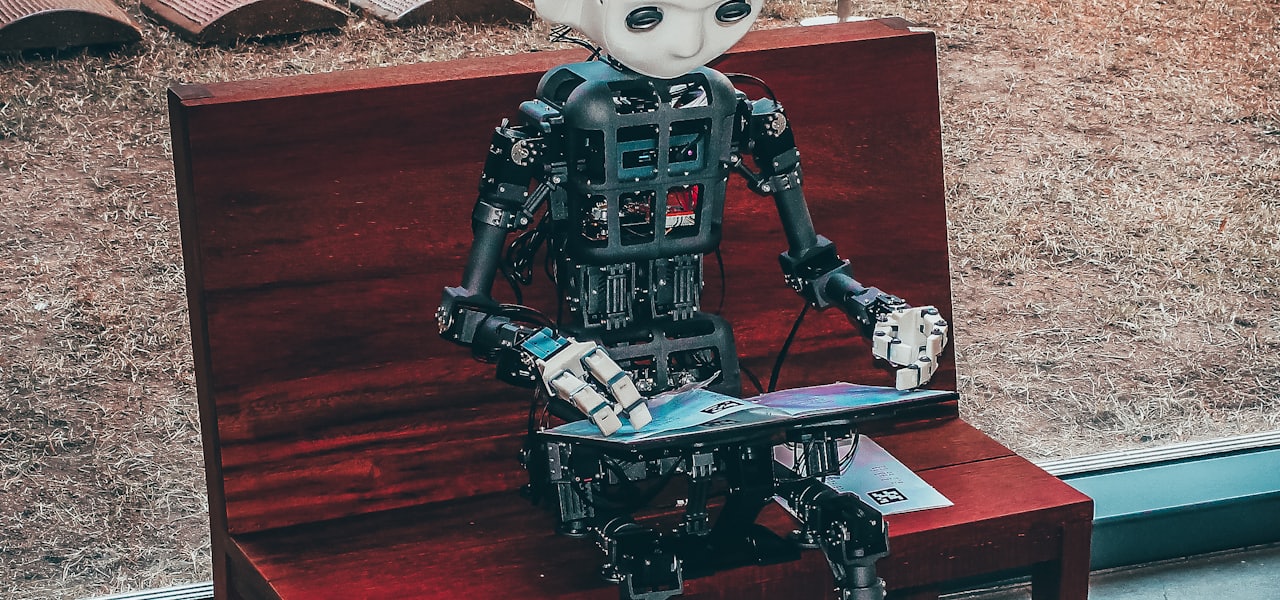
"With Folded Hands ..." is a 1947 science fiction novelette by American writer Jack Williamson (1908–2006). In writing it, Williamson was influenced by the aftermath of World War II, the atomic bombings of Hiroshima and Nagasaki, and his concern that "some of the technological creations we had developed with the best intentions might have disastrous consequences in the long run." The novelette first appeared in the July 1947 issue of Astounding Science Fiction and was later included in The Science Fiction Hall of Fame, Volume Two (1973) after being voted one of the best novellas up to 1965. In 1950, it was the first of several Astounding stories adapted for NBC's radio series Dimension X. == Rewrite and sequel == The 1947 publication was followed by a novel-length rewrite, with a different setting and inventor. At the behest of Astounding editor-in-chief John W. Campbell, a new ending had the robots defeated by means of what Williamson and Campbell would later christen "psionics". This novel was serialized, also in Astounding (March, April, May 1948), as ... And Searching Mind, and finally published in hardback book form as The Humanoids (1949). Much later, in 1980, Williamson followed with another sequel, The Humanoid Touch. == Plot summary == Underhill, a seller of "Mechanicals" (unthinking robots that perform menial tasks) in the small town of Two Rivers, is startled to find a competitor's store on his way home. The competitors are not humans but are small black robots who appear more advanced than anything Underhill has encountered before. They describe themselves as "humanoids". Disturbed at his encounter, Underhill rushes home to discover that his wife has taken in a new lodger, a mysterious old man named Sledge. In the course of the next day, the new Mechanicals have appeared everywhere in town. They state that they only follow the Prime Directive: "to serve and obey and guard men from harm". Offering their services free of charge, they replace humans as police officers, bank tellers, and more, and eventually drive Underhill out of business. Despite the humanoids' benign appearance and mission, Underhill soon realizes that, in the name of their Prime Directive, the mechanicals have essentially taken over every aspect of human life. No humans may engage in any behavior that might endanger them, and every human action is carefully scrutinized. Suicide is prohibited. Humans who resist the Prime Directive are taken away and lobotomized, so that they may live happily under the direction of the humanoids. Underhill learns that his lodger Sledge is the creator of the humanoids and is on the run from them. Sledge explains that 60 years earlier he had discovered the force of "rhodomagnetics" on the planet Wing IV and that his discovery resulted in a war that destroyed his planet. In his grief, Sledge designed the humanoids to help humanity and be invulnerable to human exploitation. However, he eventually realized that they had instead taken control of humanity, in the name of their Prime Directive, to make humans happy. The humanoids are spreading out from Wing IV to every human-occupied planet to implement their Prime Directive. Sledge and Underhill attempt to stop the humanoids by aiming a rhodomagnetic beam at Wing IV, but fail. The humanoids take Sledge away for surgery. He returns with no memory of his prior life, stating that he is now happy under the humanoids' care. Underhill is driven home by the humanoids, sitting "with folded hands," as there is nothing left to do. == Origins == In a 1991 interview, Williamson revealed how the story construction reflected events of his childhood in addition to technological extrapolations: I wrote "With Folded Hands" immediately after World War II, when the shadow of the atomic bomb had just fallen over SF and was just beginning to haunt the imaginations of people in the US. The story grows out of that general feeling that some of the technological creations we had developed with the best intentions might have disastrous consequences in the long run (that idea, of course, still seems relevant today). The notion I was consciously working on specifically came out of a fragment of a story I had worked on for a while about an astronaut in space who is accompanied by a robot obviously superior to him physically—i.e., the robot wasn't hurt by gravity, extremes of temperature, radiation, or whatever. Just looking at the fragment gave me the sense of how inferior humanity is in many ways to mechanical creations. That basic recognition was the essence of the story, and as I wrote it up in my notes the theme was that the perfect machine would prove to be perfectly destructive... It was only when I looked back at the story much later on that I was able to realize that the emotional reach of the story undoubtedly derived from my own early childhood, when people were attempting to protect me from all those hazardous things a kid is going to encounter in the isolated frontier setting I grew up in. As a result, I felt frustrated and over protected by people whom I couldn't hate because I loved them. A sort of psychological trap. Specifically, the first three years of my life were spent on a ranch at the top of the Sierra Madre Mountains on the headwaters of the Yaqui River in Sonora, Mexico. ... [My mother] was terrified by this environment. My father built a crib that became a psychological prison for me, particularly because my mother apparently kept me in it too long, when I needed to get out and crawl on the floor. ... In retrospect, I'm certain I projected my fears and suspicions of this kind of conditioning, and these projections became the governing emotional principle of "With Folded Hands" and The Humanoids. == Reception == In 2024, Robert Silverberg wrote an essay in which he asserted that "With Folded Hands..." is "probably the best story ever written about robots" and suggested that Elon Musk's Optimus Generation 2 is the realization of the "humanoids" along with their worst drawbacks.